

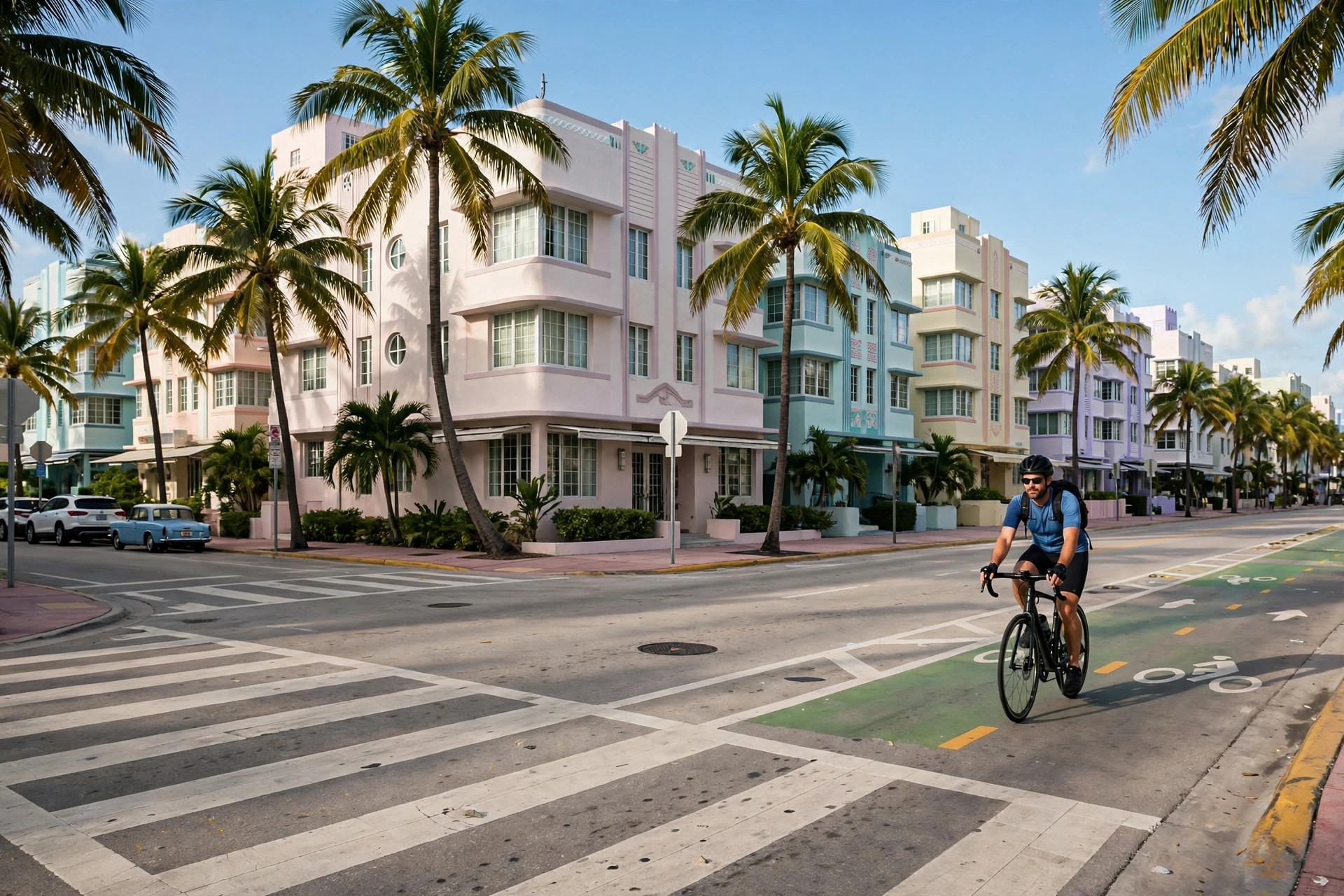
Pedestrian and Bicycle Accident Lawyer in Miami
Miami-Dade County is one of the most dangerous places in America to walk or ride a bike. Between distracted drivers, wide high-speed arterials like Biscayne Boulevard and Collins Avenue, and intersections designed for cars rather than people, pedestrians and cyclists pay the price — often with life-altering injuries.
At Tacher Law, Mario Tacher has spent over 40 years fighting for injured Floridians. If you were struck while walking or cycling, call +1 (305) 644-2211 for a free consultation.
Drivers Owe You a Duty of Care
Florida law requires drivers to exercise due care to avoid colliding with any pedestrian or bicyclist on the roadway (Florida Statute 316.130). Drivers must yield at crosswalks, give at least three feet when passing a bicycle, and stay alert in areas where foot and bike traffic is expected — near beaches, parks, schools, and transit stops. When they fail, they can be held accountable.
Common Causes We See
Failure to yield at crosswalks and intersections, drivers turning without checking bike lanes, distracted driving — especially texting — speeding in residential and beach zones, drunk or impaired driving, “dooring” parked-car occupants opening doors into bike lanes, and poor lighting or missing sidewalks that force pedestrians into traffic.
Serious Injuries, Serious Stakes
Without the protection of a vehicle frame, pedestrians and cyclists suffer traumatic brain injuries, spinal cord damage, multiple fractures, and internal injuries. Medical bills mount fast, and insurance companies often try the same tired playbook: claiming you “came out of nowhere” or weren’t visible. We counter with evidence — traffic camera footage, witness statements, accident reconstruction, and the driver’s own phone records.
What to Do After You’re Hit
Call 911 and get medical care right away. If possible, photograph the scene, the vehicle, and your injuries, and get the driver’s information plus contact details for any witnesses. Do not admit fault or downplay your injuries at the scene. Then call a lawyer before you talk to any insurance company.
Your Rights Under Florida Law
Even if you were outside a crosswalk, you may still recover compensation — Florida’s modified comparative negligence rule reduces (rather than eliminates) recovery unless you were more than 50% at fault. And you generally have two years from the crash to file suit, so do not wait.
Tacher Law — 16445 Collins Avenue, Suite 1625, Sunny Isles Beach, FL 33160. Call +1 (305) 644-2211 or contact us online for a free consultation. Hablamos español. No fees or costs unless we win.
Frequently Asked Questions
What should I do right after being hit by a car as a pedestrian in Florida?
Call 911, get medical attention even if you feel okay, and document everything — photos of the scene and your injuries, the driver’s information, and witness names. Florida’s 14-day PIP rule still applies if you own a car with personal injury protection, so getting checked promptly protects both your health and your benefits. Then consider speaking with an attorney before giving statements to any insurer.
Does my car insurance PIP cover me if I was hit while walking or biking?
Yes. Your own auto policy’s personal injury protection follows you as a pedestrian or cyclist in Florida. If you do not own a car or carry PIP, the at-fault driver’s PIP may provide coverage instead. This is one of the least understood parts of Florida’s no-fault system, and insurers do not always volunteer the information.
Can I still recover if I was crossing outside a crosswalk?
Yes, in many cases. Florida follows modified comparative negligence: your compensation is reduced by your percentage of fault, and you can recover only if you are not more than 50% at fault. A jury might assign you partial fault for jaywalking, but the driver may bear the larger share for speeding, distraction, or failing to yield. Do not assume you have no case — Tacher Law offers free consultations at (305) 644-2211 to evaluate what happened.
What are Florida’s bicycle traffic laws?
Under Florida law, a bicycle is a vehicle with the same rights and duties as a motor vehicle driver when ridden on the road — ride with traffic, obey signals, and use lights at night. Drivers must leave at least three feet when passing a cyclist. Riders under 16 must wear a helmet. Violations of these rules by a motorist — such as an unsafe pass — can establish fault in a crash.
What compensation is available in a pedestrian or bicycle injury case?
You may recover medical expenses, lost wages and earning capacity, and non-economic damages such as pain and suffering when your injuries meet Florida’s tort threshold for stepping outside the no-fault system. In fatal cases, surviving family members may bring a wrongful death claim. An attorney can identify all available coverage, including the driver’s liability policy and your own uninsured motorist coverage.
